
Brain-Centered Rehabilitation
Post-Concussion, Dysautonomia, Dizziness, Headaches
These conditions often are rooted in how your brain is putting together what your eyes, inner ear, and body are telling it. Brain-centered rehab finds where that's breaking down and helps it recalibrate at a pace your nervous system can handle.
After a concussion, an illness, or a long stretch of chronic emotional stress, this multi-sensory integration (vision, vestibular, proprioception, interoception) can fall out of sync, and the symptoms show up in the body. Brain-centered rehab works on the coordination of this integrative processing, finding which systems are struggling and retraining them.
What recovery depends on
Specificity
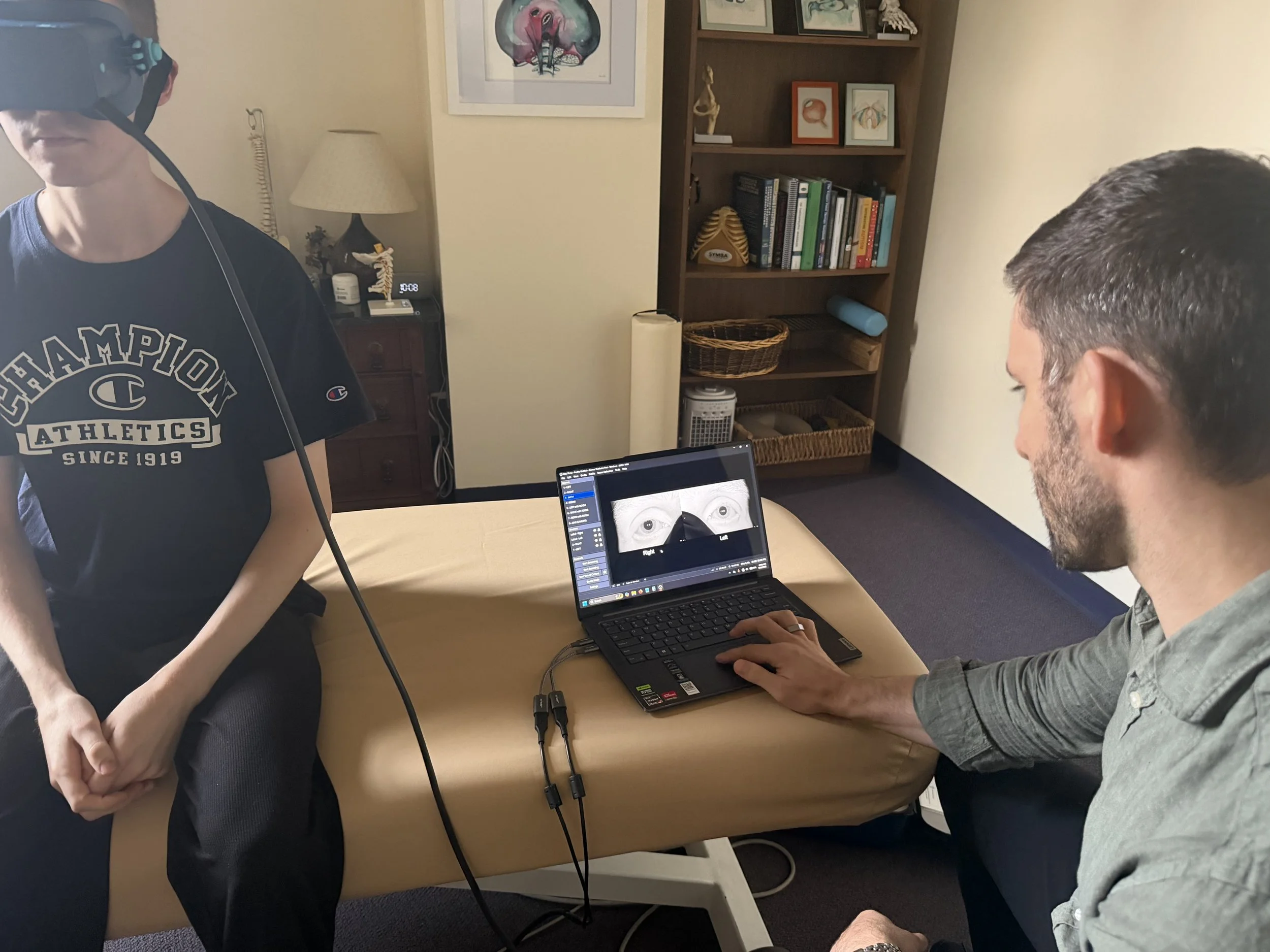
The exam shows which systems are struggling: how your eyes track, how your inner ear and physical balance respond, how you process motion.
There are many possible combinations affected systems in concussion and autonomic nervous system conditions; so having a specific image of what is happening within you is central to designing treatment.
Dosage
We need enough stimulus to drive change but not sets off your symptoms; especially if you’re system is sensitive. The correct dose shifts as you improve, and monitoring that threshold is crucial to recovery from these conditions.
Measurement
Key findings are frequently re-tested as we go, so we can see what's changing instead of guessing.
Sound treatment theory is a start, but rather than assuming results, we check if treatment is having the impact we want. We make the adjustments needed to fit your individual system.
WHO THIS IS FOR
If any of this sounds familiar, it’s worth taking a closer look.
These symptoms often cluster together, and they tend to get split among different specialists in traditional care. Here they're assessed as one system.
Dizziness, vertigo, or feeling off-balance
Overwhelm in busy places: stores, subways, crowds
Headaches or neck pain tied to eyes or movement
Lightheadedness or racing heart when you stand (dysautonomia)
Rehab that helped at first, then plateaued
Concussion symptoms that haven't resolved
Visual strain, trouble with reading or screens
Motion sensitivity in cars, trains, or elevators
Brain fog or fatigue after visual or mental effort
Symptoms that spike with exercise or exertion
How people get stuck
A normal scan doesn’t guarantee normal function
MRIs and CT scans look for structural damage, which is important and ruling that out matters.
But most lingering concussion and dizziness symptoms are problems of function — how circuits are working together vs visible damage — and imaging isn't designed to see functional issues.
Generic programs don't match your system.
Rest or a standard handout of exercises assumes everyone’s problem is the same. But two people with the same diagnosis can have very different systems out of balance, and each needs its own type and amount of challenge.
Too little and nothing changes; too much and symptoms flare.
The emotional side gets left out.
How safe your body feels shapes how well it integrates new input. Ongoing stress, fear after an injury, or a body that never processed an event can keep symptoms flaring and stall progress, even if the rehab exercises are appropriate.
My Somatic Experiencing training lets us assess and work with that level alongside the neurological exam and rehab.
WHERE REGULATION FITS
Sometimes the nervous system has to settle before it can adapt.
Rehab asks your brain to handle more: more motion, more visual complexity, more challenge to your balance. A system that's already braced for threat can read that challenge as danger. When that happens, regulation becomes part of the rehab itself.
In practice, sessions can move between the two: training that challenges the system, and regulation that helps it come back down. Over time, what you can tolerate expands.
It may be worth adding regulation if:
Exercises reliably flare your symptoms, even at low doses
You feel on edge, panicky, or shut down during or after training
Your injury came with a frightening event, like a car accident or a bad fall
Stress and sleep drive your symptom swings more than activity does
WHAT TO EXPECT
How the work unfolds
STEP 1
Assessment
A detailed history, then an exam of eye movements, vestibular function, balance, coordination, and how you respond to movement.
STEP 2
A Specific Plan
A combination of active and passive treatments. Manual therapy and acupuncture as needed, together with vision, vestibular, and balance and coordination training.
STEP 3
Measure progress
We re-check key findings as we go, so progress is visible rather than assumed, and we adjust the plan based on this feedback.
STEP 4
Home program
Short, specific exercises between visits. Most of the change happens through what you practice at home.
Ready to find out what’s going on?
Book an assessment, or send a note if you'd like to talk about whether this is a good fit first.